Far North Queensland, Australia is a world-renowned eco-tourism and biodiversity hotspot, offering exceptional learning opportunities for students studying biology, ecology, and environmental science. On this tropical biology and ecology field trip to Australia, the Great Barrier Reef, Daintree Rainforest, and the Australian outback become immersive outdoor classrooms. With a strong focus on rainforest ecology and marine biology, this educational field studies tour provides access to some of the most biologically diverse ecosystems on Earth, including two UNESCO World Heritage–listed regions.
Throughout this biology school trip to Far North Queensland, students are guided by experienced local biologists and marine scientists who deliver expert lectures alongside hands-on fieldwork. You gain practical experience in species identification, ecological sampling techniques, and field research methods, while exploring both terrestrial and marine environments. By the end of this Australia biology field course, students return home with a deeper understanding of tropical ecosystems, applied ecology, marine science, and Australian culture, making this an unforgettable and academically rigorous learning experience.
for 15 or more students
for 10-14 students



Details
- Explore the undersea world of The Outer Great Barrier Reef
- Set up camp on a tropical island for marine studies
- Walk with an Aboriginal guide to discover rainforest plants and animals
- Soar high above the jungle in James Cook University’s canopy crane
- Visit a turtle rehabilitation centre and a bat hospital
- View unique Aussie wildlife while nocturnal spotlighting
- Tour massive underground lava tubes in the arid outback
- Stay overnight in a rainforest research station
- Learn both marine and terrestrial data sampling techniques
- Contribute to both reef and rainforest tree health research
15+ students: $5269 AUD per person (inc GST)
10-14 students: $5386 AUD per person (inc GST)
Includes:
- Risk assessment
- All activities as described in the itinerary
- Cairns airport transfers
- All transportation
- Small World Journeys naturalist guide for terrestrial segment
- Small World Journeys marine biologist guide for inner reef segment
- 6 nights at a central Cairns 3-star hotel (2, 3 or 4-share rooms)*
- 2 nights Undara glamping (tents, sleeping bags and pads provided)
- 1 night Cairns Highlands cabins (students in single-gender cabins)*
- 1 night island camping (tents and sleeping pads provided)
- 1 night Daintree Rainforest research station (4 or 6 bed dorm-style rooms)
- 1 night live aboard boat (students in single-gender quad- or twin-share cabins)
- All continental breakfasts
- All lunches (except on Free Day 7)
- All dinners (except on Free Day 7)
- 101 Animals of the Wet Tropics, 101 Plants of the Wet Tropics, and 101 Animals of the Great Barrier Reef field guides for each student
- Mask, fins, and snorkel hire
- Reusable water bottle and cloth shopping bag
- Donation made to Reef Restoration Foundation to the “Care for Coral” program on behalf of your group (we give you a certificate on your trip)
- Donation in your group’s name to Reforest for tree planted in Mabi Forest and its ongoing maintenance for the first several years
*Cairns accommodation – Two teacher rooms (private twin or triple share rooms) are included in the trip price for groups of 15 students or more. For trips with low numbers (10-14), one teacher room is included. A supplement is charged if an additional private room is required for the trip (please ask us for pricing). If teachers are happy to share a room, no additional costs are incurred. Single supplement is not available at the Daintree Rainforest Research Station, teachers and guides may be required to share dorms here.
Small World Journeys reserves the right to change the order of activities for logistical reasons.
Prices are valid for travel 1 April 2026 until 31 March, 2027 outside of peak travel times.
Peak times incur a 5% surcharge: 25-30 March 2027 | 25 June – 12 July 2027 | 20 September – 5 October 2027
- Airfare to Cairns
- Travel insurance (highly recommended)
- One lunch and two dinners
- Personal expenses (souvenirs, laundry, etc.)
- Photo cuddling a koala ($28 AUD)
- Certified SCUBA dive package – 5 dives + 1 night dive ($125 AUD including equipment)
- Introductory SCUBA dive package – 2 Intro Dives ($175 AUD including equipment)
- Mangrove boardwalk and creek cleanup (2 hours; add $39 per person)
- Drain stencilling service project for the reef (2 hours; add $39 per person)
IMPORTANT NOTE ABOUT SCUBA DIVING: In order to participate in SCUBA diving, you will be required to fill out a medical form which can be forwarded to you in advance. Some of the medical conditions that may disqualify you from diving are, but not limited to, the following: Diabetes, Asthma, Ear/Nose/Throat Conditions, Migraine Headaches, Previous Head Injuries, Epilepsy/Seizures/Convulsions, Pregnancy and/or Poor Physical Conditioning. We can forward you this medical form before the start of your trip.
Planning Your Trip
ACCESSIBILITY MENU: Small World Journeys’ website provides an accessibility menu. Visitors to our website can click on the “person” icon on the right side of the screen to bring up this menu. Options include increasing/decreasing font size, increasing/decreasing contrast, dyslexia-friendly fonts, and the ability to hide images, among other things.
BOOKING FORM: On our online booking form, we ask all participants to list any special needs they have, be them medical, dietary, or accessibility needs. We also offer free sensory packs to our guests who are neurodivergent, which include headphones, a timer for transitions, a squeezy fidget toy, and other treats to appeal to the senses like flavoured lip balm.
WAIVER FORMS: We understand that not all of our participants’ parents have a strong command of written English and therefore understanding and signing our on-line waiver may prove challenging. We therefore have our wavier form available in the following languages on request: Chinese, French, German, Italian, Japanese, Portuguese and Spanish.
Arrival at Cairns Airport
ACCESSIBLE TOILETS: Public toilets are located throughout the terminals. Each toilet facility includes an accessible toilet suitable for wheelchair access.
TGSI and HEARING LOOPS: The Cairns Airport makes use of Tactile Ground Service Indicators (TGSI) and Hearing Loops to assist people with vision impairments and hearing difficulties, respectively. For example, Braille is included on toilet doors/signs to assist a person with vision impairment locate the correct facility.
ASSISTANCE FOR HIDDEN DISABILITIES: If you or someone you are travelling with has a hidden disability, you can request a hidden disability lanyard through a form here. Wearing a sunflower lanyard when you are at Cairns Airport is a discreet way for you to indicate to the airport team that you may need a little extra help, guidance or time with the airport processes. The airport team has been trained to recognise the lanyard and provide the assistance and support you may need. Some of the airport staff will also be wearing a Sunflower badge on their shirts or lanyards to help you feel a little more at ease.
VISUAL AND WRITTEN STORY GUIDES: Visual Story Guides are available for Domestic Arrivals and have been designed to help you to understand how an airport works and what to expect. Written Story Guides are also available for Domestic Arrivals.
Our Safety Talks
Our arrival safety talk is done verbally but is supported by cards that illustrate the main talking points. Similarly, our snorkelling safety talk is done in the same manner, supported by cards with pictures and illustrations.
We can provide a transcript of our safety talk to any hearing-impaired guest.
Transport
Our buses have two steps up of approximately 40 cms to get inside. There is no lift for a wheelchair or mobility device. Similarly, on occasion we hire large coaches for bigger groups and those buses also have two steps up of about 40 cms to get inside. All buses are equipped with seatbelts.
Presentations & Workshops
OUR OFFICE & PRESENTATION SPACE: We use the Small World Journeys office space for presentations, workshops and some community service projects. There is a rise of approximately 2 cm to enter the presentation room. We have one accessible, gender-neutral toilet block with shower.
The presentation room is equipped with chairs, and chairs with armrests are available on request for guests who may benefit from additional support when sitting down or standing up.
In the outside area of our office, planes fly overhead frequently and the noise can be startling and confronting. However, as part of the terms of construction, the entire building has sound mitigation devices (double glazed windows, etc.) which creates the opportunity for multiple breakout spaces for neuro-divergent people who desire a quiet space with reduced stimuli.
Our presentations are designed to appeal to both visual and auditory learners. We can provide a transcript of our presentations to any hearing-impaired guest.
NOVOTEL PRESENTATION SPACE: We also use Novotel Cairns Oasis Resort for presentations at dinnertime.
Overall accessible resort information:
- All entries to the hotel are wheelchair-accessible
- 2 accessible spaces in the on-site car park, near lifts
- 1 accessible toilet in hotel lobby (hand rail | grab bar)
- Most walkways within the hotel are wheelchair-accessible
- Well-lit main areas
- All meeting rooms are accessible
- Braille call buttons for lifts on each floor (external)
- On-site restaurant & breakfast buffet is mostly accessible – Please ask for assistance at hot food station.
Hotels
FLEXIBILITY WITH ACCOMMODATION: We have flexibility with the accommodation we choose; therefore if we know in advance that we have a guest with a wheelchair, mobility scooter or is short statured, we can choose hotels that cater accordingly.
PREFERRED HOTEL 1: One of our preferred Cairns hotels is centrally located and one block from the waterfront. The reception and breakfast room are widely accessible through a double automatic door as there are no steps or thresholds. Accessible guest rooms are all on the ground level. The staff are happy to move the furniture around if required, and the rooms are fitted with a zipped-together queen bed or two single beds depending on preference. The under-bed clearance is 40mm, and there’s around 1000mm of space between the side of the bed and the wall. Unfortunately, the balconies have sliding door tracks and may not be completely accessible. Light switches are all large dish-style type and located 1000mm from the floor in accessible locations. The air conditioning can be remotely controlled. Moving into the bathroom: the hotel boasts accessible showers and toilets that are hobless and fitted with a fold-down seat. Both horizontal and vertical grab rails are fitted and the shower is home to a hot and cold flick mixer tap. The lifts which provide access to the third accessible room provide ample space for wheelchairs, and also boast buttons fitted with Braille.
PREFERRED HOTEL 2: A second preferred hotel is also centrally located. With accessible rooms that boast a double bed and a single bed, the staff at Coral Tree Inn are also happy to move the room furniture around to suit guests who use a wheelchair or mobility device. With a coffee and tea making space and a small bar fridge at hand, the TV can also be controlled by the remote. It’s worth noting that at this hotel the air conditioning unit cannot be operated by a remote. There is an accessible combined toilet and shower facility fitted with grab rails and a fold-down set. The shower is also hobless for added accessibility. Unfortunately, the balconies have sliding door tracks and may not be accessible to all guests, and there are also no designated accessible parking bays. However, there is ample room for drop offs immediately in front of reception.
Entering the reception may also be a little difficult as the door is manual, but staff are always happy to assist (and man the desk 24 hours). There are wide paths that lead from the reception to every area of the resort, including the BBQ area, the pool and the adjoining dining room.
Meals & Restaurants
FLEXIBILITY WITH RESTAURANTS & CATERING: We have quite a bit of flexibility with the restaurants we choose; therefore if we know in advance that we have a guest with a wheelchair, mobility scooter or is short statured, we can choose restaurants that cater accordingly.
We offer flexible menu options for people who have food allergies or intolerances, and in many cases religious requirements relating to food.
Guests are given space on our online booking form to specify their allergy, intolerance or religious requirement. On arrival we then give them a bag containing, for example, lactose-free milk, nut-free cereal and snacks, and/or other food items that cater to this allergy or intolerance. Unfortunately, we are not able to guarantee catering for preferences like low carb meals or FODMAP.
Similarly, we inform all caterers and restaurants of our guests’ food allergies or intolerances. Breakfast is typically served at the hotel, whilst lunches are often boxed lunches as we move around quite a bit on our tours.
Activities
If we are informed in the planning phase of your trip about any participants or (potential participants) who have disabilities or special needs, we can suggest certain activities over others or suggest certain boats to the reef. For example, one boat that travels to the reef has a lift for a guest in a wheelchair to get in and out of the water which is a great choice for guests with wheelchairs or mobility devices. Conversely, we know that the facilities on the boat that travels to the Fitzroy Island reef is not well set up for those with wheelchairs or mobility devices. We also can include activities such as the Skyrail Rainforest Cableway, which recognises and supports the Sunflower program for people with hidden disabilities.
On this particular trip, there are quite a few activities:
Bat Hospital:
Undara National Park:
The Kalkani day-use area has wheelchair-accessible toilets. Road Cave has ramps and a lift that can be accessed as part of a guided tour. While the “glamping” tents are not suited for those using a wheelchair or mobility device, there is accessible accommodation available in the refurbished train carriages that not serve as hotel rooms. Train carriages by nature are narrow but Undara has an option with some accessible features including ramp access and open plan bathroom with shower chair. It should be noted, space is limited due to the structure of a rail carriage and this accommodation won’t be suitable for everyone with access needs. There are spots on site where a person who is neurodivergent could find a quiet space with reduced stimuli.
A fair level of mobility is required for the The Undara Lava Tubes tour as it does include around 300 stairs. They are properly constructed and maintained with landings and some rest benches.
James Cook University:
There are ramps and lifts that give wheelchair and mobility device access to most of the University and there are accessible toilets in every building on the University campus. There are spot on campus where a person who is neurodivergent could find a quiet space with reduced stimuli. As the presentations and information about the marine labs are given verbally and there is limited support for people with hearing impairments.
JCU Research Station
The station is not well-equipped for people using wheelchairs or mobility devices. All of the activities we do on site are within a 5 minute walk from the station, terrain is uneven, on grass, pebbles or dirt. There is an ambulant bathroom and toilet in the block directly opposite the students dorms, without walking up or down stairs. There are spots on site where a person who is neurodivergent could find a quiet space with reduced stimuli.
Mossman Gorge Walk
The Visitors’ Centre and toilets are accessible for wheelchair or mobility devices. People using a wheelchair or mobility device can access the the river track & first 500m to the look-out on board walk. Groups can be kept to under 10 people for guests with mild to moderate hearing impairments so guide can project their voice loud enough for guest to hear; guides like to have one on one conversations & questions if guests needed. There are many quiet spots in the park where people who are neurodivergent can rest. As the presentations and information given about the fieldwork are given verbally, there is limited support for people with hearing impairments; however our guides will be able to assist those with vision impairments.
The Inner Reef Trip:
- The boat cannot accommodate persons using wheelchairs and mobility devices.
- Safety instructions are given verbally (no written instructions available).
- The captain is the first point of call for any questions or queries in regards to accessibility and/or special requirements that guests may have on the day.
- Assistance dogs are permitted, but must be confirmed with the reservations team prior to the trip.
- The boat uses pictogram signs (for example a pictogram showing feet standing on coral with a red line through it) to assist people with low literacy levels or who speak English as a second language. The company also has risk snorkel assessment forms in Japanese & Chinese for those nationalities.
- The distance from the Reef Fleet terminal to the vessel is approximately 150 metres; unfortunately no assistance is available for guests with mobility impairments.
- Lunch catering is sourced from a third party contractor who supply very detailed ingredient lists on request. Most dietary restrictions (gluten or lactose free, vegan, nut-free) can be accommodated.
- Although the boat itself does not have a specific low-stimulus quiet area, there are places on the island that could serve in this capacity.
- The island has dirt tracks and uneven terrain to get to the turtle rehab centre, and the beach front is mostly coral rubble.
The Outer Reef Trip: Liveaboard Boat
- The liveaboard boat is not equipped to accommodate wheelchairs or mobility devices.
- Safety instructions are given verbally (no written instructions available).
- The captain is the first point of call for any questions or queries in regards to accessibility and/or special requirements that guests may have on the day.
- The boat uses pictogram signs (for example a pictogram showing feet standing on coral with a red line through it) to assist people with low literacy levels or who speak English as a second language.
- The distance from the Reef Fleet terminal to the vessel is approximately 150 metres; unfortunately no assistance is available for guests with mobility impairments.
- Most dietary restrictions (gluten or lactose free, vegan, nut-free) can be accommodated.
- There are limited spots where a person who is neurodivergent could find a quiet space with reduced stimuli on the main decks; however the sleeping cabin can act in this capacity.
Fieldwork
In most cases where we do our fieldwork, there are no accessible toilets and no provisions for people who use a wheelchair or mobility device. There are spots where a person who is neurodivergent could find a quiet space with reduced stimuli. As the presentations and information given about the fieldwork are given verbally, there is limited support for people with hearing impairments; however our guides will be able to assist those with vision impairments.
Optional Mangroves Workshop
There are no accessible toilets at the mangroves boardwalk and the sites where we do this project and no provisions for people who use a wheelchair or mobility device. There are not necessarily any spots on site where a person who is neurodivergent could find a quiet space with reduced stimuli. People with hearing impairments can easily be shown visually how to do this project and but there are no special accommodations for those with vision impairments.
Optional Drain Stencilling Project For The Reef
There are no accessible toilets at the sites where we do this project and no provisions for people who use a wheelchair or mobility device. There are not necessarily any spots on site where a person who is neurodivergent could find a quiet space with reduced stimuli. People with hearing impairments can easily be shown visually how to do this project and but there are no special accommodations for those with vision impairments.
Departure at Airport
VISUAL AND WRITTEN STORY GUIDES: Visual Story Guides are available for Domestic Departures and have been designed to help you to understand how an airport works and what to expect. Written Story Guides are also available for Domestic Departures.
Excursion Safety & Compliance Checklist
1. Check Small World Journeys Safety Record
☐ Demonstrated excellent safety record with thousands of high school students – both Australian students and international students
☐ Teacher safety references available on request
☐ Proven experience delivering school excursions and educational tours
2. Risk Management & Documentation
☐ Written risk assessment completed for every excursion
☐ Risk assessment provided to organising teacher prior to departure
☐ Activities governed by documented Standard Operating Procedures (SOPs)
☐ Crisis Management Plan in place and available to schools
☐ Daily risk review conducted by guides during the program
3. Student Safety Briefings
☐ Mandatory student safety briefing delivered during program orientation
☐ Briefing addresses local environmental hazards and regional risks
☐ Clear expectations for student behaviour and group safety
4. Transport Safety
☐ All buses fitted with seatbelts for every passenger
☐ Vehicles exceed Queensland minimum legal requirements
☐ Daily vehicle safety checks conducted by guides
☐ Buses undergo Department of Transport inspections every 12 months
5. Guide Qualifications & Child Safety
☐ All guides hold current Senior First Aid certification
☐ All guides hold current CPR certification
☐ Valid Driver’s Authority held by guides when driving
☐ Valid Working With Children Check (Blue Card)
☐ Guides have undergone thorough background screening
☐ Guides trained in duty of care, code of conduct with teenagers and risk management
6. Supervision & Duty of Care
☐ Appropriate student-to-guide supervision ratios
☐ Teachers supported by experienced trained guides
☐ Clear lines of responsibility for student wellbeing and incident response
7. Compliance Assurance
☐ Program aligns with school excursion policies and approval requirements
☐ Documentation suitable for principal approval and risk review
☐ Ongoing communication with schools before and during the excursion
Itinerary

Arrival in Cairns:
Welcome to Cairns, Far North Queensland, the gateway to the Great Barrier Reef and the Daintree Rainforest. On arrival at Cairns Airport, you are met by one of our friendly local staff and transferred to your centrally located hotel in the heart of Cairns’ restaurant, café, and shopping precinct.
Biodiversity Presentation:
Before exploring the rainforest, you take part in an in-depth biodiversity presentation on the Wet Tropics World Heritage Area, of which the Daintree Rainforest forms a key part. This region is one of the most biologically diverse ecosystems in Australia, home to over 100 rare or threatened animal species and many plants found nowhere else on Earth—including ancient species dating back to the age of dinosaurs. You learn how Traditional Owners have managed the rainforest for thousands of years, and how the Wet Tropics is managed today at local, regional, and national levels. The session explores why this landscape of jade mountains and lush emerald rainforest is a unique geographical anomaly, alongside discussions on climate change, ecosystem resilience, vulnerability, and biophysical interactions. You finish with a deeper understanding of and appreciation for this globally significant natural environment you are about to experience firsthand.
Before dinner, you have time to explore the nearby Cairns Esplanade, a vibrant waterfront area featuring night markets, street performers, and a large public swimming lagoon. In the evening, you enjoy a welcome dinner at a waterfront restaurant in Cairns, marking the start of your Far North Queensland adventure.
Accommodation: Cairns 3-star hotel
Meals Included: Dinner

Introduction to Field Work & Species Transects:
Today you work alongside your guide to explore biological fieldwork techniques and ecological data interpretation. Your field study takes place in the Cairns Highlands, an area protecting vast tracts of lush tropical rainforest. Dividing into small research teams, you learn how to establish a vegetation and habitat transect, then collect and record data on rainforest plant and animal species within a defined survey area—developing practical skills used by professional ecologists and field biologists.
Researcher Techniques:
While conducting your transect survey, you apply species identification and wildlife observation techniques, keeping watch for iconic and rare rainforest fauna such as the red-legged pademelon, the Eulamprus tigrinus skink, and the endangered, flightless southern cassowary. This hands-on exercise strengthens your understanding of biodiversity monitoring, habitat assessment, and field research methods used in tropical ecosystems.
Bat Hospital:
Later you visit the Tolga Bat Hospital, a renowned wildlife rehabilitation centre, to learn about the ecological importance of bats and their role in Australian ecosystems. Orphaned fruit bat pups are admitted due to tick paralysis or loss of their mothers, and dedicated volunteers nurse them back to health before releasing them into the wild. The hospital also provides long-term sanctuary for bats retired from zoos, offering insight into wildlife conservation and animal care in Australia.
Savannah Lands and Outback:
You then travel west through a dramatically changing landscape, observing how shifts in geology, climate, and rainfall patterns influence vegetation and animal life. Crossing the Great Dividing Range, dense rainforest transitions into savannah woodlands and arid outback, where towering termite mounds dot the landscape and kangaroos roam freely. In the late afternoon, you arrive at Undara National Park, setting up camp for the night in this remote outback environment. Accommodation includes access to toilets and hot showers, allowing you to experience the Australian outback while remaining comfortable.
Accommodation: “Glamping” safari-style tents
Meals Included: Breakfast, Lunch and Dinner

Undara National Park:
Today you spend the day exploring Undara National Park and its world-famous lava tubes, one of Australia’s most significant geological attractions. These lava tubes are among the largest, longest, and most accessible lava tube systems in the world, formed by a volcanic eruption from Mount Undara approximately 190,000 years ago. While the volcanic geology is extraordinary, equally fascinating is the unique flora and fauna that have evolved within the collapsed tube depressions and underground cave environments, creating distinct micro-habitats unlike the surrounding woodland.
Lava Tubes Tour:
This morning’s focus is on volcanic geology during a guided two-hour lava tubes tour. As you walk through the cool underground tunnels, caves, and caverns, a local expert explains the shield volcano origins, the unusual granitic basement, and why Undara’s lava tube system attracted interest from NASA as an analogue for extraterrestrial landscapes. This immersive experience brings ancient geological processes to life.
Field Work:
Back in the park, you continue your biology and ecology fieldwork, comparing soil types, vegetation communities, and wildlife found within lava tubes and collapse depressions to those in the surrounding savannah woodland. You observe an impressive diversity of birdlife—over 150 bird species have been recorded here—and learn about species discoveries previously unknown to science, including new snail species and insect-eating bats. You also examine highly specialised cave-dwelling organisms such as blind insects, colourless shrimp, and beetles, which have evolved without eyesight or camouflage in the dark basalt environments.
Wildlife at Sunset Tour:
Late in the afternoon, you take part in a Wildlife at Sunset tour, spotting iconic Australian animals including kangaroos, wallabies, vibrant cockatoos, and other native species in their natural habitat. At dusk, you visit the entrance of a lava tube to witness thousands of micro-bats emerging to feed, creating a spectacular wildlife event. This nightly feeding frenzy attracts predators such as pythons and brown tree snakes, offering a dramatic insight into the complex food webs and ecological interactions of the Australian outback
Accommodation: “Glamping” safari-style tents
Meals Included: Breakfast, Lunch and Dinner

Field Work and Vegetation Studies:
Today you explore Forty Mile Scrub National Park, a rare and fascinating example of a dry rainforest ecosystem in Far North Queensland. Known for its extreme seasonal rainfall patterns, this unique environment supports semi-evergreen vegetation that absorbs heavy summer rainfall and sheds leaves during the exceptionally dry winter months. Walking beneath a closed rainforest canopy filled with vine thickets, Burdekin plum trees, lemon-scented gums, and broad-leafed bottle trees with massive trunks, you encounter a striking landscape that bridges the arid outback and the Wet Tropics World Heritage Area. Through hands-on vegetation surveys and ecological field studies, you examine ground cover, soil types, plant communities, and wildlife, identifying species such as red-necked pademelons adapted to this climate, seasonal flying-fox camps, and the near-threatened white-flowered onion vine.
Wet Tropics and Glowworms:
This afternoon you return to the Wet Tropics rainforest. After dark, you take a guided walk through the forest to observe one of Australia’s most remarkable natural phenomena—glow worms. These bioluminescent insects create tiny points of light in the darkness as they attract mates, offering insight into rainforest ecology and nocturnal adaptation.
Nocturnal Wildlife Spotlighting:
Later in the evening, you travel to Mt Hypipamee National Park to explore a rare volcanic pipe formation known as “the Crater” and the surge of wildlife that emerges after sunset. During a guided nocturnal spotlighting session, you search for crepuscular and nocturnal rainforest species, with a focus on endemic animals such as Lumholtz’s Tree-kangaroo, Green Ringtail Possum, and the musky rat-kangaroo. Along the way, you may also encounter a wide range of marsupials, reptiles, and mammals, deepening your understanding of night-time rainforest biodiversity in Far North Queensland.
Accommodation: Highlands Cabins
Meals Included: Breakfast, Lunch and Dinner
Platypus Spotting:
Early this morning, you join your guide to search for the elusive platypus in its natural freshwater habitat. Widely regarded as one of the most unique mammals on Earth, the platypus is an egg-laying monotreme found only in Australia. Observing a platypus in the wild is a rare and memorable wildlife experience, and your guide explains its behaviour, habitat requirements, and evolutionary significance—highlighting why the platypus is an iconic symbol of Australian wildlife.
Data Interpretation and Presentations:
After breakfast, you regroup to review and discuss the ecological data and fieldwork findings collected over the past several days. You present your results, practise scientific data interpretation, and take part in group discussions that link field observations to broader biological and ecological concepts.
Rainforest Discovery with Indigenous Guide:
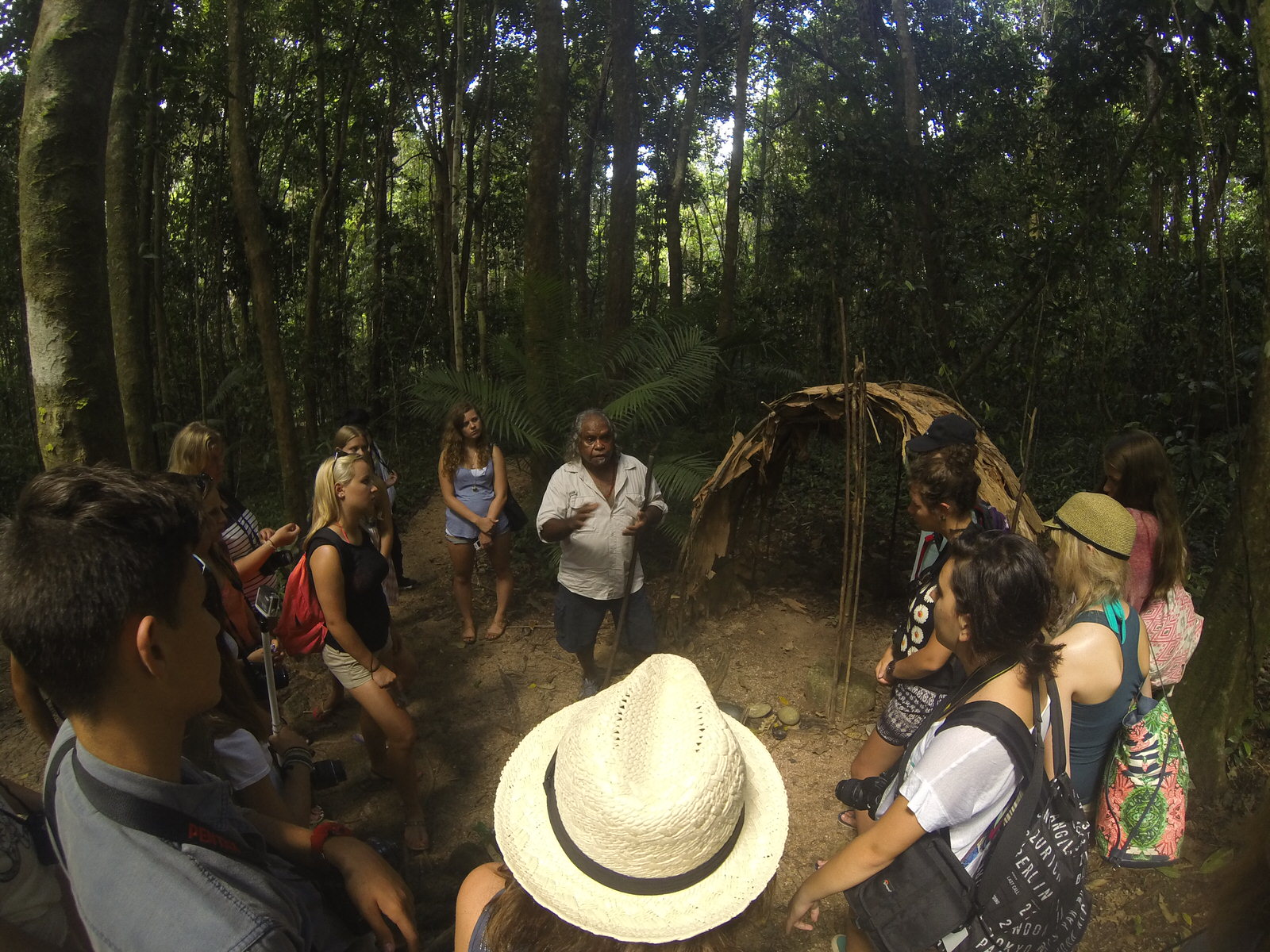
Next you explore the Daintree Rainforest at Mossman Gorge, an area of deep cultural significance to the Kuku Yalanji Traditional Owners. Beginning with a traditional smoking ceremony, you walk rainforest tracks with an Indigenous guide, learning how Aboriginal people navigated dense rainforest, built shelter, and identified native plants used for food, tools, weapons, and medicine. Through storytelling, you discover how seasonal cycles shaped daily life, understand the roles of men’s and women’s business, and learn traditional skills such as making fire and catching fish. This meaningful cultural exchange offers insight into how Indigenous people have sustainably lived on this land for thousands of years. You finish the experience by sampling billy tea and wattle-seed damper, cooked on the fire and served with jam made from rainforest berries.
Daintree Rainforest:
Later you venture deeper into the Daintree Rainforest, recognised as the oldest continually surviving tropical rainforest on Earth. For students of tropical biology and ecology, this region is of exceptional scientific importance. It contains the highest concentration of primitive flowering plant families worldwide, is home to Australia’s rarest mammal—the Murina florious bat, and supports 13 bird species found nowhere else on the planet.
Daintree Rainforest Observatory:
Next you arrive at the Daintree Rainforest Observatory, a world-class eco-monitoring and research facility equipped with wet and dry laboratories. Located in the heart of the rainforest, the site is recognised for having the highest biodiversity recorded anywhere in Australia. After a safety briefing, you take part in a presentation exploring the ecological significance of the Daintree and the cutting-edge research and long-term monitoring projects conducted at the station.
Research Station:
Your accommodation for the night is within the research station facilities. Students stay in single-gender dormitory rooms with four or six beds, while teachers are housed separately. You have access to a shared industrial kitchen, and nearby amenities provide laundry, bathroom, and shower facilities, allowing you to stay immersed in the rainforest environment while remaining comfortable.
Accommodation: Daintree Rainforest Research Station
Meals Included: Breakfast, Lunch and Dinner
Environmental Debate:
This morning you take part in an interactive environmental debate focused on development, sustainability, and impacts on biodiversity. Using background information and a summary of an Environmental Impact Statement (EIS) for a proposed large-scale resort development in Cairns, students are assigned the roles of different community stakeholders. You argue for or against the development by evaluating economic, social, and environmental impacts, as well as proposed sustainability measures. This engaging activity encourages critical thinking and evidence-based decision-making, using a real-world case study that has attracted significant national media attention.
James Cook University Canopy Crane:
Next you experience a truly unique opportunity with a visit to the James Cook University (JCU) Canopy Crane, a research facility not open to the general public. Located in the Daintree Rainforest, this crane is the only tropical forest canopy research crane in Australia and forms part of an international network monitoring forest canopies worldwide. It plays a vital role in long-term research into rainforest biodiversity, climate, and ecosystem processes.
After a safety briefing and an expert talk on the ecological significance of the Daintree Rainforest, you board a suspended gondola in small groups with the crane operator. The crane lifts you above the rainforest floor and rotates 360 degrees over the canopy, allowing you to observe firsthand the extraordinary biodiversity that underpins the area’s UNESCO World Heritage status. Like professional researchers, students develop hypotheses to test while in the canopy. (Students must be at least 15 years old to access the canopy crane.)
Service Project:
While not in the crane, the rest of the group participates in a hands-on environmental service project at the research station. Hundreds of trees have been planted on site for rainforest regeneration, and students learn how to conduct tree condition assessments using methods applied by field biologists and botanists. You explore concepts such as pioneer species, herbivory, and forest recovery, while learning to use scientific tools including clinometers and DBH tapes to measure tree growth. Your collected data contributes directly to ongoing JCU research into the success of reforestation efforts.
Insect Traps and Lab Work:
With guidance from an on-site JCU researcher, you construct insect traps to assess the invertebrate biodiversity of the rainforest. You examine how different insect species have evolved specialised adaptations to survive in tropical environments. This practical laboratory and field experience reinforces key concepts in biology, ecology, and evolutionary science through hands-on investigation.
Water Quality Measurements:
Working with your guide, you learn how water quality indicators reveal information about ecosystem health and species survival. You conduct water testing for parameters such as pH, nitrates, phosphates, and dissolved oxygen, analysing how these factors influence aquatic life. Results may indicate fertiliser runoff, nutrient loading, or biological extremes, supporting discussions around eutrophication and habitat suitability.
In the late afternoon, you return to Cairns for a group dinner, reflecting on a day of advanced fieldwork, research, and real-world environmental learning.
Accommodation: Cairns 3-star hotel
Meals Included: Breakfast, Lunch and Dinner

Free Time:
Today you have the day to finish your notes and findings for your terrestrial portion of your tropical biology trip. You can relax at the public swimming lagoon, shop for souvenirs at the Night Markets, and sample some local fare.
You can also choose to get an iconic photo with a koala in your free time – we’ll tell you where to get one (extra costs).
Optional Evening Activity – Documentary Film:
Documentary films can inspire discussion and action, in addition to complementing the content of your trip. Tonight you have a choice to view one of several optional documentary films that relate to the reef and the environment (no extra cost).
Accommodation: Cairns 3-star hotel
Meals Included: Breakfast

Marine Science Seminar:
Today you travel to James Cook University, Australia’s highest-ranked university for environmental science and marine biology. During a marine science–focused seminar and interactive workshop, you engage directly with world-leading marine researchers, including venomologist Dr Jamie Seymour and shark specialist Richard Fitzpatrick. This exclusive learning experience highlights marine research and study pathways available nowhere else in Australia.
Mangrove Biome:
On campus you explore a working mangrove biome model, complete with a resident crocodile. This living system is a vital research tool used to study water quality, salinity, coastal ecosystems, and the role of mangroves in climate change mitigation and carbon sequestration.
Venomous Creatures:
You also examine preserved specimens of some of the world’s most venomous marine animals, including the stonefish, cone shell, and box jellyfish. Researchers explain how JCU scientists are advancing marine toxin research and anti-venom development, providing insight into medical applications and ocean safety.
Observation of Marine Animals:
Using advanced underwater camera technology, you observe marine animals up close, including sharks, rays, cleaner wrasse, and clownfish. You learn about James Cook University’s role in marine filming and documentary production, as well as its success in housing and studying rare species such as the Australian lungfish, which has historically proven difficult to maintain in captivity.
Perhaps most importantly, today provides a controlled introduction to marine environments and species you will encounter first-hand over the coming week, building confidence, awareness, and scientific understanding before entering the Great Barrier Reef.
Accommodation: Cairns 3-star hotel
Meals Included: Breakfast, Lunch and Dinner

Ferry Ride to Fitzroy Island:
This morning you meet your marine biologist guide and travel by ferry to Fitzroy Island, a pristine tropical island surrounded by turquoise waters. Over thousands of years, a fringing coral reef has formed around the island, creating a sheltered habitat for a diverse range of reef fish and coral species. Now protected as a national park, Fitzroy Island is covered by 94% tropical rainforest and bordered by clear waters ideal for marine exploration. Located on the inner Great Barrier Reef, the island and surrounding reefs support some of the highest marine biodiversity on the planet.
In-Water Assignments and Island Lectures:
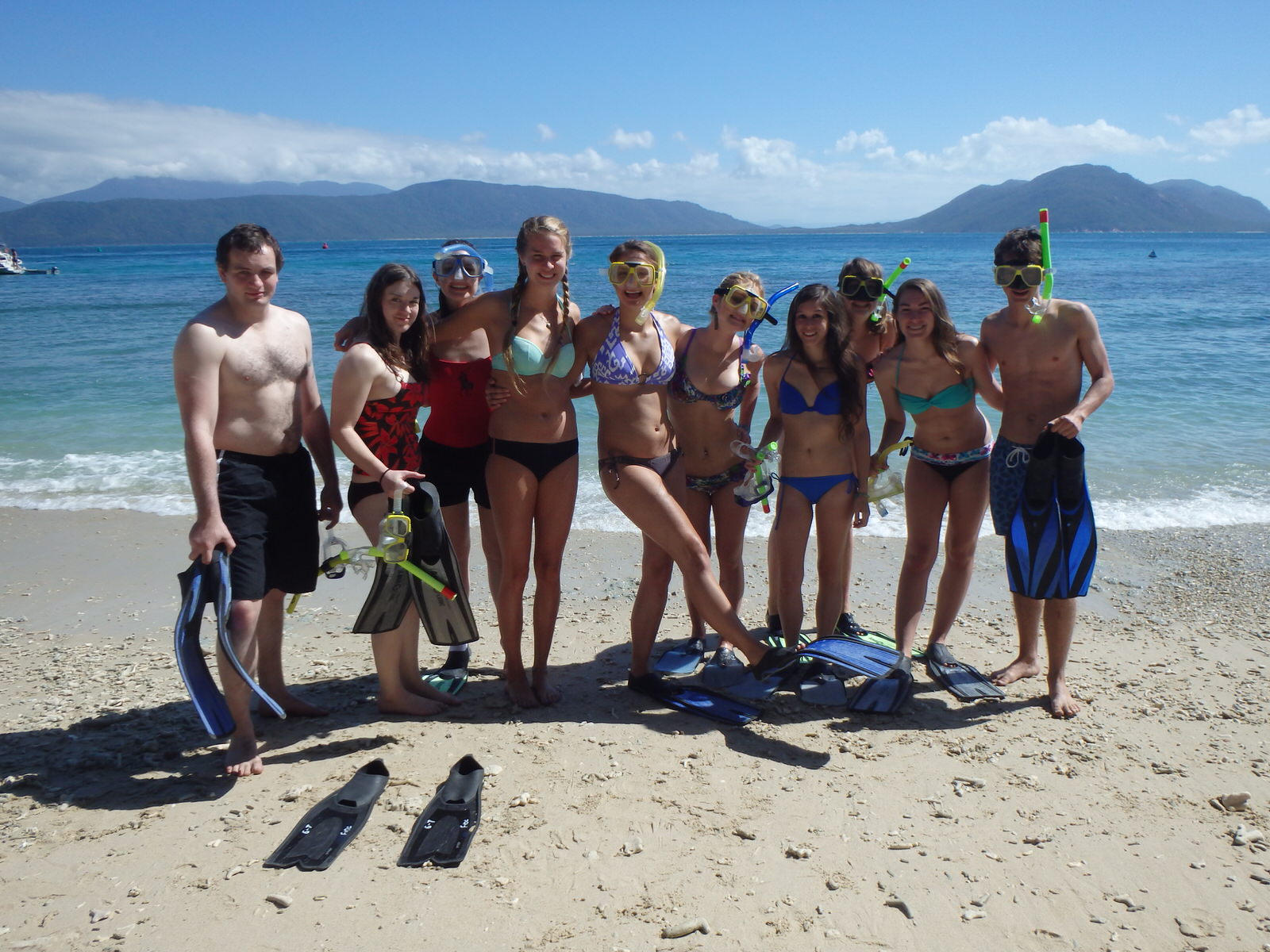
On the island, you alternate between interactive lectures and hands-on in-water fieldwork. Your first marine science session focuses on major fish families of the Great Barrier Reef and fish identification techniques—knowledge that is transferable to coral reef ecosystems worldwide. You then collect your snorkelling equipment and enter the water at Welcome Bay, aiming to identify species such as cuttlefish, parrotfish, wrasse, and lionfish, while applying real-world marine survey skills.
Field Guide:
Each student receives a copy of 101 Animals of the Great Barrier Reef by Dr Martin Cohen, a comprehensive reef identification guide designed to support your marine observations. This resource is yours to keep and use throughout your studies.
CoralWatch Data Collection:
In the afternoon, you take part in a CoralWatch citizen science activity, addressing global concerns around climate change and coral bleaching. You learn how and why coral bleaching occurs, identify different coral types, and match coral colours to a waterproof CoralWatch chart before recording observations in pairs. Your data is submitted to University of Queensland CoralWatch scientists, where it contributes to long-term analysis of reef health and global bleaching trends. Your group’s findings can be added to an international database, and from this you can receive a graph summarising your results.
Island Camping & Evening Lecture:
After snorkelling, you return to your beachfront island campground, located just metres from the water. Tents are provided, along with a BBQ area for meal preparation, indoor and outdoor cold showers, and essential facilities. In the evening, you attend a lecture on human impacts on coral reefs and marine protected area management, before relaxing at the island resort’s games area and live nightly music, surrounded by the sounds of the reef.
Accommodation: Fitzroy Island Campground
Meals Included: Breakfast, Lunch and Dinner
Lighthouse Hike:
This morning, those seeking a challenge can tackle a scenic but steep rainforest hike through tropical vegetation to the island’s historic lighthouse. Along the way, you may spot the elusive yellow-spotted monitor lizard among the trees. At the summit, you are rewarded with 360-degree panoramic views across the island, surrounding rainforest, and the Great Barrier Reef, making this one of the most spectacular lookout points in the region.
Guided Snorkelling:
Later in the morning, you take part in guided snorkelling alongside your marine biologist, using a life ring and floating bar for support. In the water, your guide highlights textbook examples of reef ecology, including camouflage, symbiosis, mimicry, and conspicuous colouration, helping you interpret coral reef adaptations in a real-world setting.
Field Techniques and Sampling:
Your focus then turns to marine field techniques and sampling methods, followed by instruction on how to conduct an underwater transect survey. Working with a 50-metre transect line and waterproof data sheets, each student takes on a specific research role. This practical activity reinforces the importance of teamwork, data accuracy, and standardised scientific methods used by marine scientists.
Turtle Rehabilitation Centre:
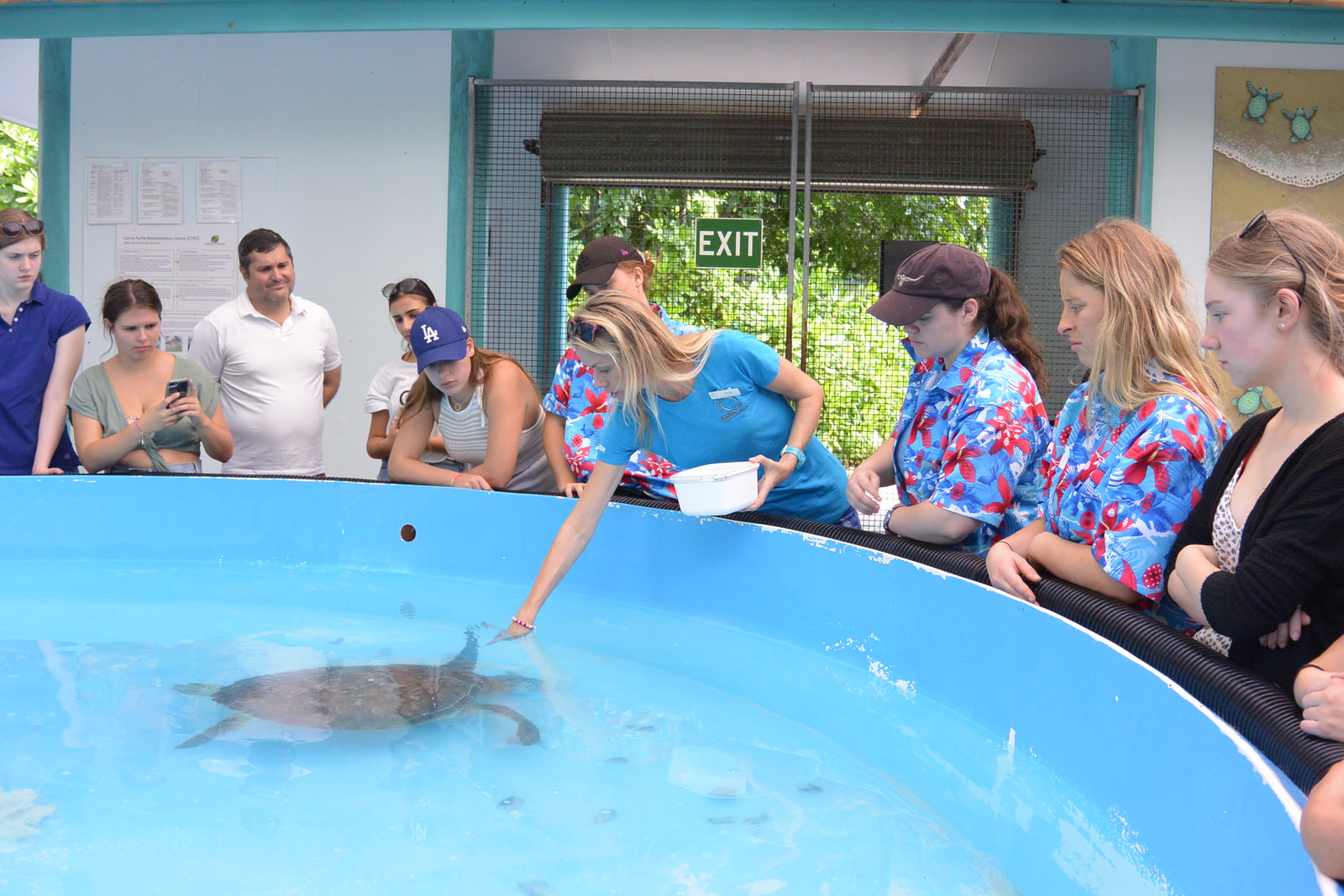
Later, you visit the Fitzroy Island Turtle Rehabilitation Centre, where dedicated volunteers care for sick, injured, and stranded sea turtles. During your visit, you learn about turtle feeding and breeding behaviour, the leading causes of turtle injuries and mortality, and the full rehabilitation and release process. This conservation-focused experience highlights the challenges facing marine wildlife and the role of community-led environmental stewardship.
In the afternoon, you return to Cairns by ferry, concluding your island-based marine science experience.
Accommodation: Cairns 3-star hotel
Meals Included: Breakfast, Lunch and Dinner

Boat Trip to Outer Reef:
No visit to Cairns is complete without exploring the Great Barrier Reef, a UNESCO World Heritage Site and one of the world’s most spectacular natural wonders. This morning, you transfer from Fitzroy Island to the outer Great Barrier Reef, where your vessel heads toward Moore Reef. Upon arrival, snorkellers gain exceptional access to this vibrant underwater ecosystem, with crystal-clear water revealing an extraordinary diversity of coral formations, reef fish, and marine life just beneath the surface.
Live Aboard Boat:
In the afternoon, you transfer to your liveaboard reef vessel, your floating base for the next stage of reef exploration. On board, you enjoy freshly prepared meals and comfortable accommodation in twin- or quad-share cabins, each with private bathroom facilities and air conditioning, ensuring a relaxed and well-supported experience at sea.
Snorkelling:
Over the next two days, you immerse yourself in the outer reef environment, observing how healthy coral thrives in clear ocean water to form vast coral gardens that support an incredible array of marine species. Among the 1,800 species of reef fish and 450 species of coral found on the Great Barrier Reef, you may encounter sea turtles, giant clams, fan corals, sea cucumbers, stag-horn coral gardens, and iconic reef residents such as Wally the giant wrasse—along with many familiar characters from Finding Nemo.
While at sea, hearty buffet meals keep you well fuelled, freshwater showers and climate-controlled cabins ensure comfort, and shared lounge and sundeck areas provide space to relax between snorkelling sessions and enjoy the vastness of the Coral Sea.
Accommodation: Live aboard boat
Meals Included: Breakfast, Lunch and Dinner

Coral Predators and Bleaching:
Today marks your final day exploring the Great Barrier Reef, with a focus on identifying coral predators and observing signs of coral bleaching. Through snorkelling and guided observation, you examine reef health indicators and discuss the ecological factors that influence coral resilience and vulnerability in this globally significant marine ecosystem.
OPTIONAL EXTRA – Scuba Dive:
Snorkellers also have the option to experience introductory SCUBA diving with a qualified dive instructor. Also known as resort diving, this one-on-one experience allows participants to explore deeper sections of the reef without requiring prior certification (additional cost). It is an excellent opportunity to gain a new perspective on reef structure and marine life.
Seasonal Whale Watching:
If you travel during the months of June, July, or August, you may be fortunate to encounter migrating whales that visit the reef during the Australian winter. These whales are often seen tail-slapping, breaching, or spy-hopping, offering a memorable wildlife experience and insight into the seasonal migration patterns of large marine mammals in the Coral Sea.
Accommodation: Cairns 3-star hotel
Meals Included: Breakfast, Lunch and Dinner

After breakfast this morning, you have free time in Cairns for last-minute shopping or purchasing souvenirs. If your flight departs later in the day, you may choose one of the following optional activities:
Mangrove Boardwalk & Creek Clean-Up:
This raised boardwalk walk takes you through a vital mangrove ecosystem, an essential breeding and nursery habitat for many marine and freshwater species. With your guide, you explore how mangroves function, including their unique salt-filtration adaptations, their role as the “nurseries of the Great Barrier Reef”, and why both coastal communities and reef systems depend on healthy mangroves. You then visit a nearby creek that flows through the mangroves toward the ocean. Unfortunately, urban rubbish often enters waterways here, so you don gloves and garbage bags to take part in a hands-on creek clean-up. At the end, you tally your collected waste, with a small prize awarded to the top-scoring team. (2 hours; add $39 per person)
– OR –
Service Project for the Reef:
This alternative reef conservation service project focuses on protecting waterways and marine ecosystems through community education. By stencilling environmental messages on stormwater drains, you help raise awareness of urban runoff and its impact on oceans and coral reefs. The colourful designs act as a lasting reminder that everything that enters drains eventually reaches the sea, contributing to long-term reef protection efforts. (2 hours; add $39 per person)
Eventually all good things must come to an end. You are transferred to Cairns Airport for your flight home, concluding your immersive Far North Queensland biology and environmental journey.
Meals Included: Breakfast
How Your Trip Makes The World A Better Place
We’re not talking rainbows and unicorns. We’re talking about how we have put significant thought into how to make our student tours as safe as they possibly can be while still being fun; encouraging students to learn about and contribute to the community they are travelling in; and teaching them what “sustainability” really means.

Sustainability
OUR COMMITMENT: OUR COMMITMENT: We are determined to operate as sustainably as possible. That’s why our office runs on renewable energy, we make annual contributions to climate‑focused initiatives, and we uphold our policy of donating at least 5% of our annual net profits to local environmental and community organisations and charities. Here’s what else we are doing:
HELPING THE REEF: For every group that visits the reef, we make a donation to the Reef Restoration Foundation (now re-named Resilient Reefs) to support their "Care for a Coral" program. The coral propagation work led by Resilient Reefs is groundbreaking and recognised as a major initiative in efforts to help restore the reef. Each group receives a "Care for a Coral" certificate from Resilient Reefs as a token of our contribution and commitment to reef conservation.
ADOPTING A RAINFOREST PLOT IN YOUR NAME: For each group that visits the rainforest, we contribute to the not-for-profit organisation Reforest to support the planting and nurturing of a tree, helping to regenerate the endangered Mabi rainforest. As part of your excursion, your group will receive a certificate recognising this meaningful gift to the environment...
...
Community
SUPPORTING OUR INDIGENOUS COMMUNITY: It is our policy to include a talk or an activity with an Aboriginal person on every trip we offer. By taking this trip, you are supporting grassroots Indigenous tourism ventures and encouraging Aboriginal pride in culture.Additionally, our student community service project involves students in making “Moon Sick Care Bags” which supply re-usable sanitary products to Aboriginal women in remote communities — this helps both Indigenous women AND the environment! (Ask us how your group can do this on their tour)
SUPPORTING LOCAL BUSINESSES: It is our policy to use locally owned suppliers and businesses unless their standards are not up to par (for example, if they have a bad environmental record).
VOLUNTEERING IN OUR COMMUNITY: Small World staff are incentivised to volunteer in the community...

Safety
SUPERB SAFETY RECORD: Small World Journeys has safely hosted thousands of Australian high school students on educational excursions across Australia. We are proud of our excellent safety record and are happy to provide teacher references specifically addressing student safety and risk management on request.
RISK ASSESSMENT FOR EVERY TRIP: A comprehensive risk assessment is completed for every school excursion and provided to the organising teacher prior to departure. All activities operate under documented safety protocols outlined in our Standard Operating Procedure (SOP) Manual, supported by a detailed Crisis Management Plan. In addition, all students receive a mandatory safety briefing during orientation, addressing regional hazards, environmental risks, and expected behaviours relevant to Far North Queensland.
SAFE BUSES: All vehicles used on our student excursions are fitted with seatbelts for every passenger, exceeding Queensland legal requirements because student safety is our priority. Our guides conduct daily vehicle safety checks, and all buses undergo Department of Transport safety inspections every 12 months, ensuring compliance with national transport standards.

We do custom trips!
Still haven’t found exactly what you are looking for? All our tours are fully customisable and can be catered to suit your time-frame, student interests and budget. A geography excursion to the Great Barrier Reef? A biology excursion to the Daintree Rainforest? An Aboriginal culture excursion? Our educational trips in Queensland and New South Wales are hand-crafted for those who cannot find exactly what they want from the inflexible set itineraries of large tour operators.
If you are looking for a science trip, ecology trip, Aboriginal culture, or just a sample of the best of Australia – we can help.